Sunday, March 6, 2011

Mango piña


There are 7 or 8 or 15 varieties of mango, depending to whom you talk. Mango piña smells and tastes like pineapple. When it is ripe and ready to eat it is juicy and so sweet.

Graffiti

More good graffiti. The colors of the green graffiti are so intense and work with the building. The other is announcing a Día de los Muertos celebration.


Natural colors


This rebozo shows the three natural dyes used in Oaxaca. All other colors come from these three.
The rosy red color is from grano cochinillo, a scale insect that lives on the nopal cactus. The dark indigo color is from the añil plant. The third color, that appears lilac in the photo but can also look like faded denim, is from caracol, a mollusk that lives in the ocean. To get this dye, men go onto the rocks on the beaches of Oaxaca, pick up the mollusks and squeeze them, collecting the secretions onto white threads. Then the snails are put back in the ocean. The secretions oxidize to blue and dry as lilac. So the dye from caracol is the only one of the three that comes from a living creature.

Calabaza Batida


Here is a different way to have pumpkin. It is called calabaza batida, or pumpkin shake, similar to a smoothie. It is made by cooking pumpkin with water and brown sugar until the pumpkin can be mashed by hand. Add pepitas and pozole. The dark bits that you can see in the drink are either pepitas or the rind of the pumpkin which is green-striped.
It tastes very much like pumpkin pie and is very fibrous.
Mexicans love their fiber!
There is another drink you can find in the markets called agua de chilacayote, that is made similarily. Chilacayote is a squash the size of a watermelon that when cooked has brown fibrous pulp. The drink contains seeds that are black and flat, like watermelon seeds.
Both of these drinks make me think I am having something very healthy.

Friday, March 4, 2011

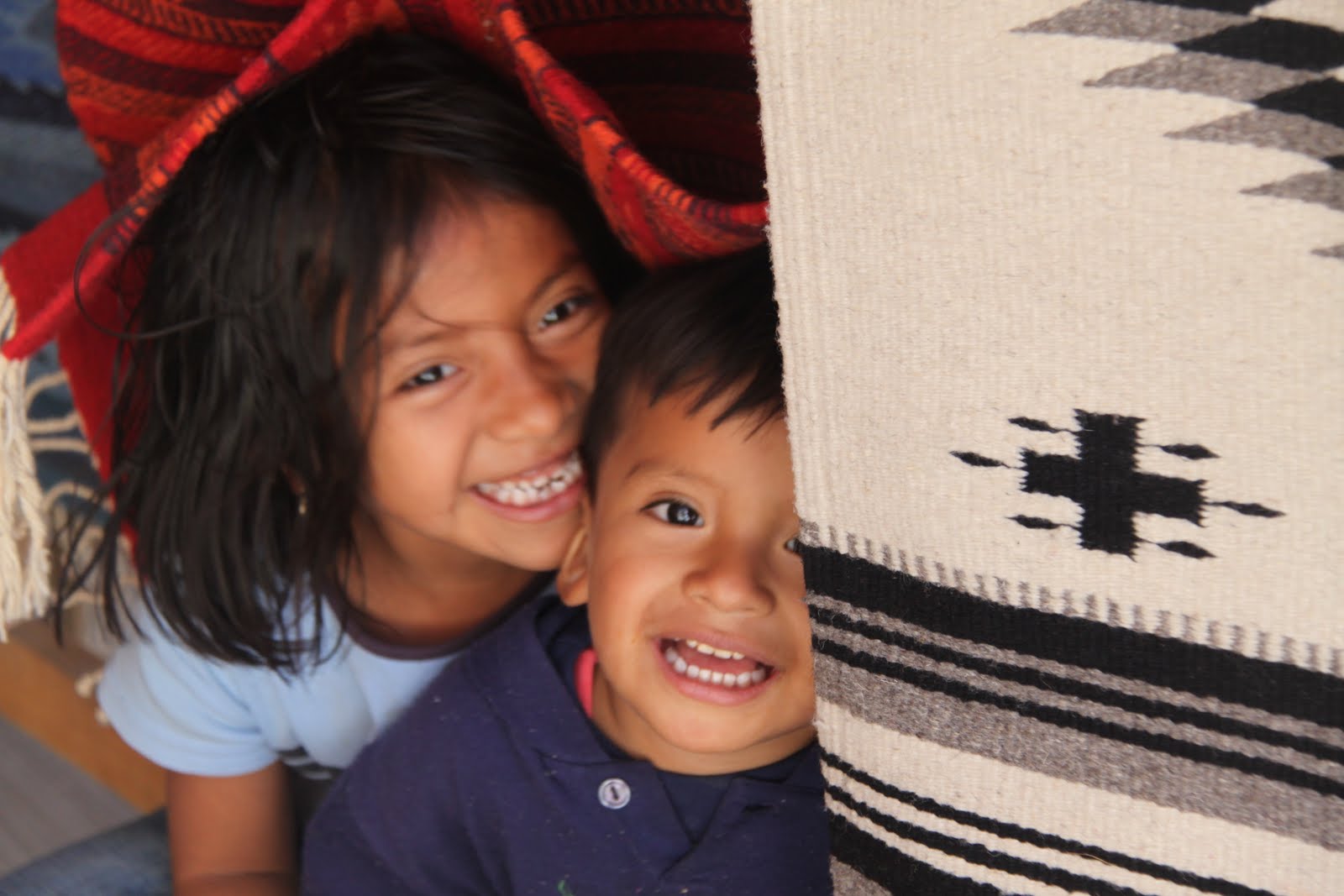
Peek-a-boo

Kids playing hide and seek among the rugs.


Flowers

Flowers come right from the fields in the farmland south of Oaxaca, known for flower growing. The women tie the bunches with strips of palm leaves or grasses.

Blue Skies


Always blue skies.